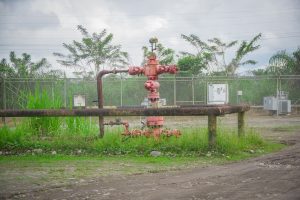
 Bloomberg Green reports that millions of methane wells around the world continue to seep methane gas for decades after the end of their working lives. Methane—the colorless, odorless, highly flammable primary component of natural gas—accounts for about 10 percent of all human-driven greenhouse gas emissions in the U.S., according to the EPA. But why would business owners decide to spend money to plug wells when they’re not required to?
There are 32 million abandoned petrochemical wells around the world. Many aren’t technically abandoned, Bloomberg reports, but rather, put on hold so owners can revive them in the future, like when oil prices are more favorable to the industry. Right now, very few people are buying gas or oil at any level because of the global COVID-19 pandemic. But like a half-finished woodworking or knitting project stowed in a storage unit, these idled wells are effectively retired.
Using idleness and the remote possibility of reactivation lets owners avoid any environmental obligations. And when those owner companies fully go out of business, the wells they’ve chosen not to maintain enter, basically, the public interest. As portions of the petrochemical industry fold, Bloomberg explains, “the wells it orphans will become wards of the state.”
The main well the Bloomberg piece follows is the Church well, placed near Rio Vista, California by the Hess Corporation and owned by (and named for) mineral-rights retainer Bernard Church. Since the 1980s, when Hess sold the well to the first of a series of subsequent owners, no one has had to care for the degrading well.
“There’s no regulatory requirement to monitor methane emissions from inactive wells, and until recently, scientists didn’t even consider wells in their estimates of greenhouse gas emissions,” Bloomberg explains.
Leave a Reply