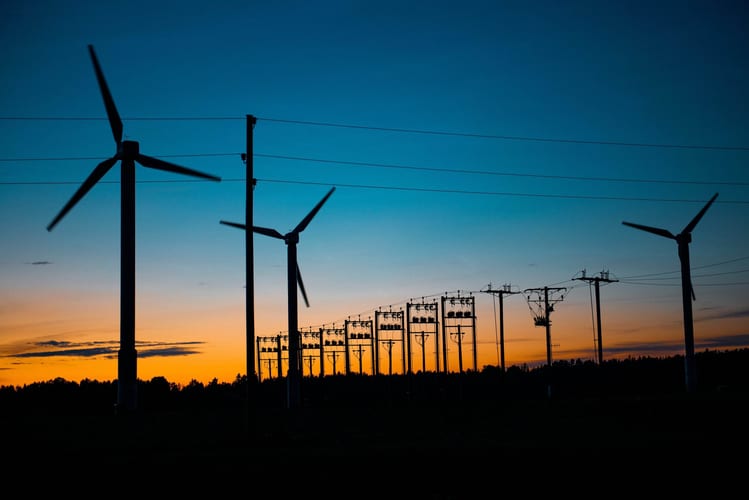
As large-scale renewable projects face increasing challenges, smaller distributed resources could offer a faster path to meeting growing electricity demand while enhancing grid flexibility.
The landscape of America’s energy sector is shifting dramatically in 2025, with utility-scale renewable projects facing unprecedented headwinds. However, amid these challenges, industry experts are pointing to distributed energy resources (DERs) and virtual power plants (VPPs) as potential solutions for utilities, industrial companies, and other heavy power consumers.
The Rise of Distributed Solutions
Distributed energy resources—ranging from residential solar arrays to flexible loads like smart thermostats and electric vehicles—are gaining attention for their speed of deployment and flexibility. These smaller-scale technologies can be combined into VPPs or demand response programs that can come online significantly faster than large-scale generating facilities.
“Distributed solar and storage can come online much more quickly than larger resources,” explains Sean Gallagher, senior vice president of policy for the Solar Energy Industries Association. This speed advantage is becoming increasingly critical as electricity demand is projected to increase by 50% by 2035, driven largely by industrial growth.
The Supply Chain Challenge
Despite their advantages, DERs aren’t immune to market challenges. Recent tariffs announced on imports from major suppliers of solar panels, batteries, and high-voltage electrical components have created uncertainty. Initial tariffs of 46% on Vietnamese products and 145% on Chinese goods were later reduced to 10% for a 90-day period for most countries except China.
Ravi Manghani, senior director of strategic sourcing at Anza Renewables, notes that while distributed generation may help sidestep grid constraints, “they are not immune to supply chain challenges, particularly for larger projects.”
Policy Headwinds for Utility-Scale Projects
The current policy environment has created what many are calling a perfect storm for utility-scale renewables. Despite clean energy providing 93% of new generating capacity in 2024, a series of executive orders has:
- Halted federal onshore and offshore wind permitting
- Withdrawn all federal waters from offshore wind leasing
- Declared an “energy emergency,” favouring thermal generating resources
Further complications include:
- Federal funding freezes affecting previously authorized support
- Anti-renewables legislation spreading across Republican-controlled states
- Uncertainty surrounding the Inflation Reduction Act tax credits
Industry analysts from The Brattle Group and ConservAmerica warn that fully repealing key IRA tax credits could reduce wind and solar deployments by approximately 50% over the next decade.
The Untapped Potential of DERs
What makes distributed resources particularly attractive is the existing capacity that could be leveraged. The U.S. currently has well over 100 GW of DERs that could be aggregated into VPPs, though over 80% remain unutilized according to Wood Mackenzie.
The Department of Energy estimates current U.S. VPP capacity at approximately 30 GW, with potential to scale to 80-160 GW by 2030.
Success Stories in Action
Several utilities are already demonstrating the potential of sophisticated VPP deployments:
- Puget Sound Energy (Washington): Combining smart thermostats, behavioural load shaping, electric vehicles, water heaters, and interruptible loads
- Portland General Electric (Oregon): Integrating batteries, water heaters, behavioural load shaping, and interruptible loads
- National Grid (New England): Utilizing smart thermostats, batteries, and technology-agnostic demand response
Large-Scale Distributed Solutions
Larger distributed projects are also gaining momentum:
- Rocky Mountain Power and Torus are collaborating on a commercial-and-industrial VPP that could provide up to 70 MW of flexible, behind-the-meter capacity by mid-2026
- Xcel Energy’s Minnesota subsidiary has proposed deploying 440 MW of distributed solar and 400 MW of distributed storage
- San Diego Gas & Electric partnered with Prevalon to deploy multiple community microgrids totaling 180 MWh
Prevalon President and CEO Tom Cornell notes, “We’ve seen a lot more utility inquiries in the past six to 12 months,” with particular interest in regions where grid reliability is challenged by infrastructure issues or weather-related risks.
Challenges Ahead
Despite their promise, DERs face their own set of challenges:
- State policy variations creating uneven adoption (Illinois, New York, and Maine accounted for 83% of capacity deployments in 2024)
- Cost disadvantages compared to utility-scale projects, though the gap is narrowing
- Program size caps limiting growth potential in emerging markets
- Supply chain vulnerabilities similar to larger renewable projects
Looking Forward
As the energy landscape continues to evolve, distributed energy resources and virtual power plants may offer a critical pathway for maintaining grid reliability and meeting growing electricity demand. With development timelines measured in months rather than years, these technologies could provide essential flexibility during a period of significant transition in America’s energy infrastructure.
Leave a Reply