The idea of the Value Crisis is an assertion that the greatest threats to humanity can be primarily attributed to the excessive precedence of number-based values. Our society has arrived at a state where quantitative values (such as money) consistently trump qualitative (life-based) values, which has led to an existential crisis.”
[Extracted from this publication.]
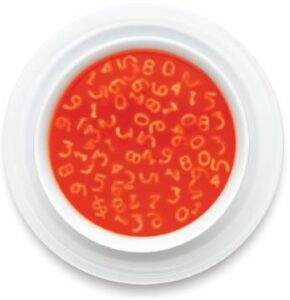
Value systems are the basis for how we make choices and decisions. Much can be learned about value systems by understanding how we, as individuals and as a society, generally measure successfulness. How one measures successfulness will determine how goals are defined, how progress is tracked, and ultimately how decisions are made in the first place. Successfulness can be measured in two ways: quantitatively and qualitatively. Successfulness by quantitative values is measured exclusively by number. The thing that you’re counting is irrelevant—it could be dollars, acres, cell phones, or even votes. Since the value is directly defined by quantity, more is always worth more, so more is always better.
Qualitative values, on the other hand, are relative and innately recognized but impossible to precisely measure. Examples include health, justice, wisdom, satisfaction, freedom, morality, joy, affection, culture, and integrity—values intimately tied to our innate programming and the very definition of humanity. We can all acknowledge their impact on our well-being, but they’re impossible to objectively translate into a number. This distinction between quantitative values (number-based values) and qualitative values (sometimes labelled living or human-based values) is the fundamental conflict of the Value Crisis.
Since quantitative values are measured and indeed defined by number, they inherit some core principles of numbers:
- Numbers are limitless (unending, infinite). This is significant, because it is a unique attribute. Numbers are the only thing we know to be entirely without end.
- Numbers are linear (a single scale going up or down). Pick any two numbers, and one will always be greater than the other. One cannot say the same of qualitative descriptors such as “happy” or “triangular”.
- Numbers are consistent (across time, space, and culture). Ten will always be greater than seven, and always by the same amount. The same mathematical operations will produce precisely the same results, no matter where, when, or by whom they are done.
Limitless
Because numbers are limitless, values measured by number are also theoretically limitless: you can always increase the value by adding more quantity. There are at least two critical consequences of this attribute. The first is that there is no built-in concept of sufficiency. People have no independent way of knowing when they have enough. More is always worth more, so why would they ever want to stop accumulating dollars or acres or getting cell phone upgrades? (This is why I use the term “successfulness” instead of “success”. “Success” can suggest an end point—an elusive goal in limitless systems.) Without the concept of sufficiency, the second problem becomes increasingly clear: Ecologically speaking, applying a limitless value system to a limited reality will eventually threaten one or the other.
Sufficiency is not just a minimum—it can define a maximum as well, and in both respects, it is a fundamental concept of happiness. As a minimum, sufficiency means you have enough and your needs are met. As a maximum, it means that you have all that you desire, and more would actually be undesirable. For example, “sufficient food” can mean that you are not starving, and it can also mean that you could not comfortably eat any more.
Linearity
The linearity of numbers means that two valuations measured by number are instantly and objectively comparable. In our complex world we are constantly presented with decisions to make. If such decisions can be turned into a number-based value comparison, they become enticingly easy—we simply select the undisputable higher valuation every time. We assume that we are at our most rational when we let the objective numbers determine our choices. Even ignoring the potential conflict with qualitative human-based values, the biggest flaw with this approach is that real life decisions almost never distil down to a single number. If you are comparing spaghetti sauces, price per ml is an obvious number, but so are overall volume, sugar, salt, fats, bacteria count, distance travelled, and shelf life. Decision-making by number is heavily dependent on which numbers are selected.
Consistency
The third principle, numerical consistency, means that the inflexibility of numbers can be gamed by some individuals at the expense of others because context can be circumvented. Consider the phenomenon of globalized trade. It is all very well to say that, relative to the cost of living, the four dollars per day that people in India are paid (to do what would cost thirty times as much in the USA) is still a fair wage. But at the end of the day, that paltry expenditure is resulting in significant savings on a corporate balance sheet in America, leading to exploitation and huge profit at the potential expense of other values and considerations. Moreover, being bound by the rules of mathematics, numeric values can be consistently and reliably manipulated. Mathematicians can shuffle bits and bytes through such practices as currency trading and complex investments like derivatives (essentially gambling) to produce phenomenal wealth without contributing any real value to the world.
Real World Impacts
While a direct correlation between quantity and value might seem intuitive and obvious, it is important to realize that…
Leave a Reply