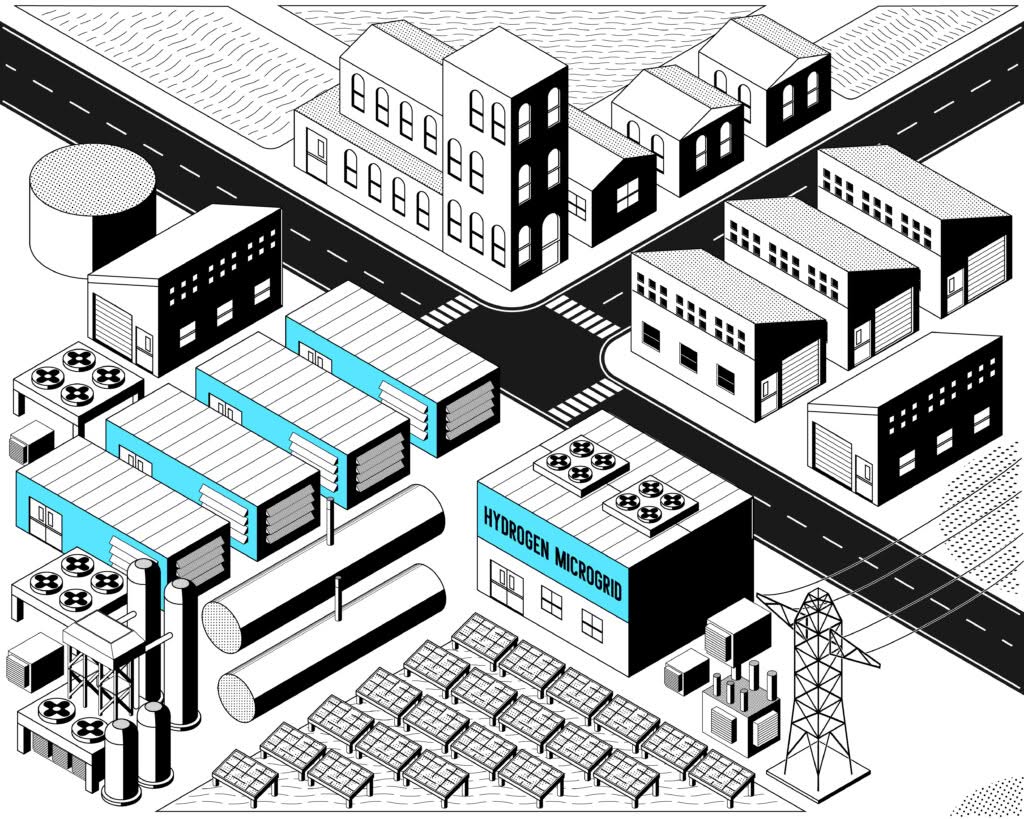
Southern California Gas (SoCalGas) was the first large natural gas utility in the US to set a goal to achieve net-zero greenhouse gas emissions by 2045. And it’s continuing to break barriers, this time by producing its first kilogram of renewable hydrogen meant for use in a residential hydrogen microgrid.
According to Neil Navin, vice president of clean energy innovations at SoCalGas, the project “shows the essential role clean fuels like renewable hydrogen can play in meeting California’s clean energy and resiliency goals and highlights our progress toward making net zero a reality.”
Powered by renewable hydrogen microgrid
The project is housed at the utility’s [H2] Innovation Experience in Downey, California, where a 2,000 square-foot home has been designed to demonstrate how a renewable hydrogen microgrid can provide resilience and reliably power neighborhoods.
The home is built to meet LEED Platinum standards with solar panels powering the home on sunny days. An on-site electrolyzer uses excess solar energy to generate renewable hydrogen, which is then stored in an on-site fuel cell. The stored energy is converted back into electricity as needed.
The only byproduct of the process is water.
SoCalGas also plans to blend renewable hydrogen with natural gas to power certain appliances in the home, including a tankless hot water heater, clothes dryer and gas stove.
Understanding the colors of hydrogen
Hydrogen production is color-coded based on the carbon intensity of the production process. “Grey” hydrogen is most commonly seen today, and it’s produced with fossil fuels. Emissions generated during the grey hydrogen production process are unabated and are typically released into the atmosphere.
“Blue” hydrogen is produced with natural gas, but carbon capture and storage technologies are used to abate emissions.
Clean, or “green” hydrogen, is produced with 100% renewable energy like wind, solar and hydropower. The process, as demonstrated at the [H2] Innovation Experience, uses an electrolyzer to separate water from hydrogen and produces zero greenhouse gas emissions.
Leave a Reply